
CONVOKE
ACCRA SHEPP
Radical Justice: Lifting Every Voice
CONCEPT
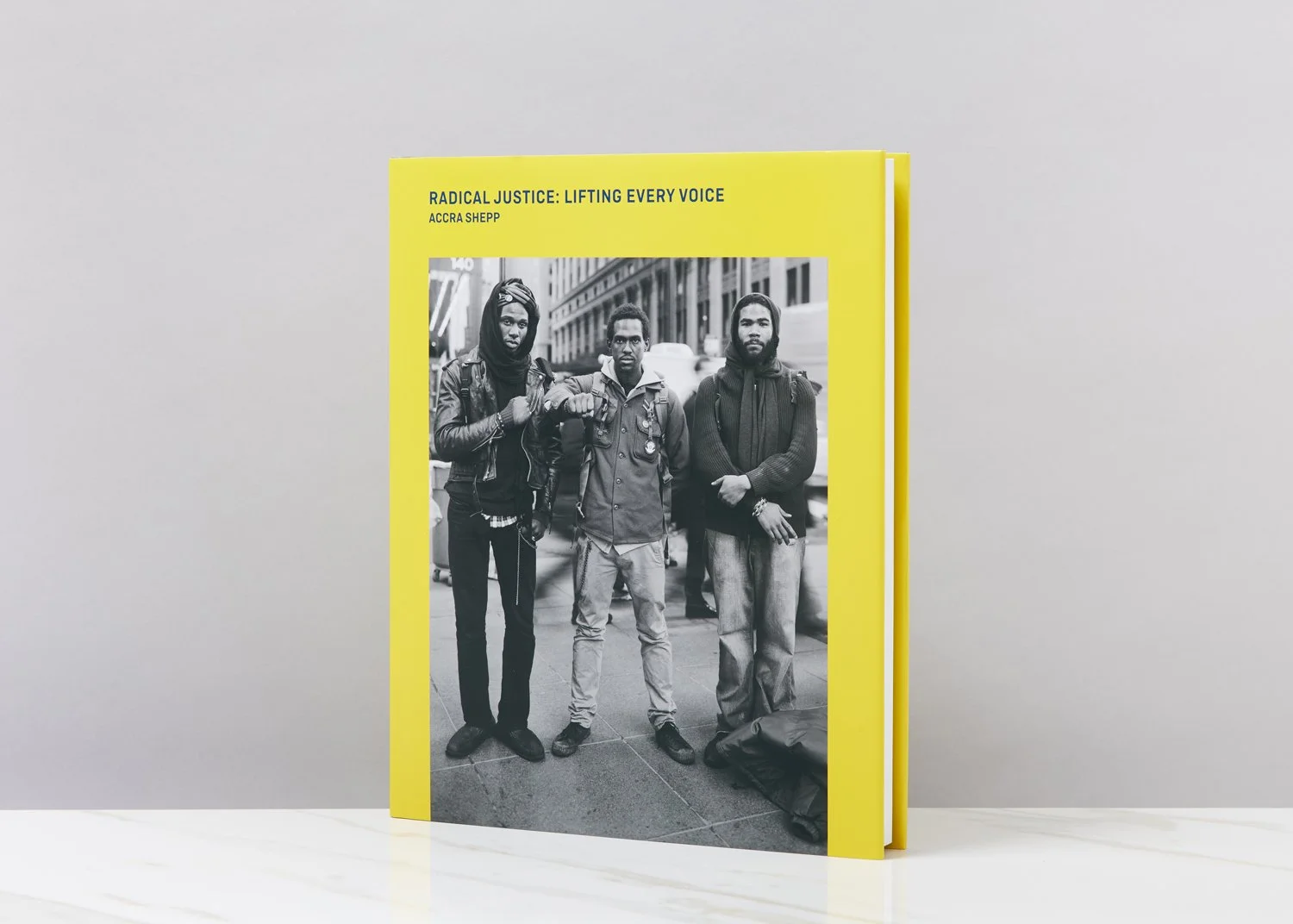
What happens when two moments of social transformation are placed in conversation through the same humanitarian photographic gaze?
Radical Justice: Lifting Every Voice answers that curatorial challenge.
Bringing Two Moments into Conversation
Occupying Wall Street
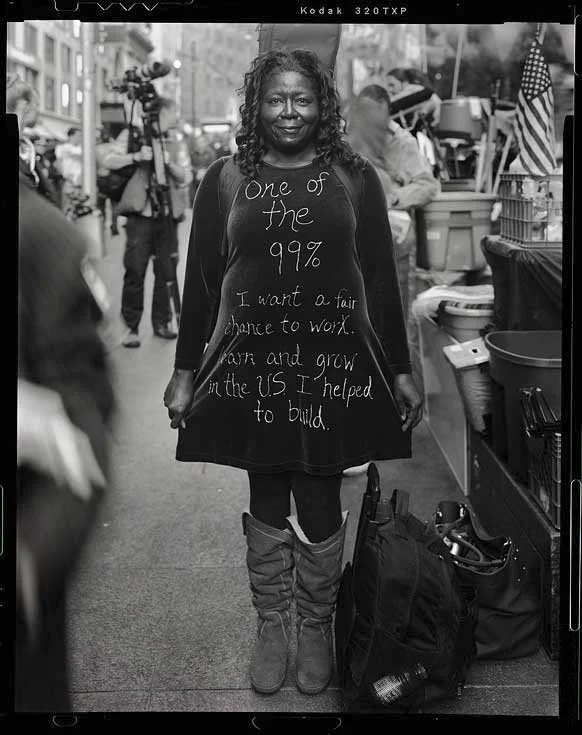
Working in the style of August Sander with a large format camera and black and white film, Shepp pictures fellow New Yorkers on their city’s streets in acts of sit-ins and active protest, both unplanned and highly organized, both independent and unified, to address notions of the 99% and 1%, which have become part of the American political vernacular. Bearing witness to defining events of the last decade that echo the United States’ longer historical arch, Shepp’s empathetic depictions of fellow citizens standing up for the fair protection of the Constitution provide a prophetic mirror of current events, which reflects back centuries to where the American experiment began, to suggest where we’ll find ourselves in the years to come.
COVID Journals: Justice
The pandemic sits like a cairn marking a trail through our collective memory. The outward aspects of this marker are not momentous, just a haphazard pile of discarded worries and fears, concern about cloth masks versus paper masks, dim recollections of isolation and ambulance sirens, the smell of hand sanitizer. It does, however, mark a threshold in contemporary history where we collectively faced our responsibility to each other – to reflect upon the idea long denied by social norms that our own personal welfare is connected to the welfare of not only our neighbors but also those we hardly know and especially those we try to not to know.
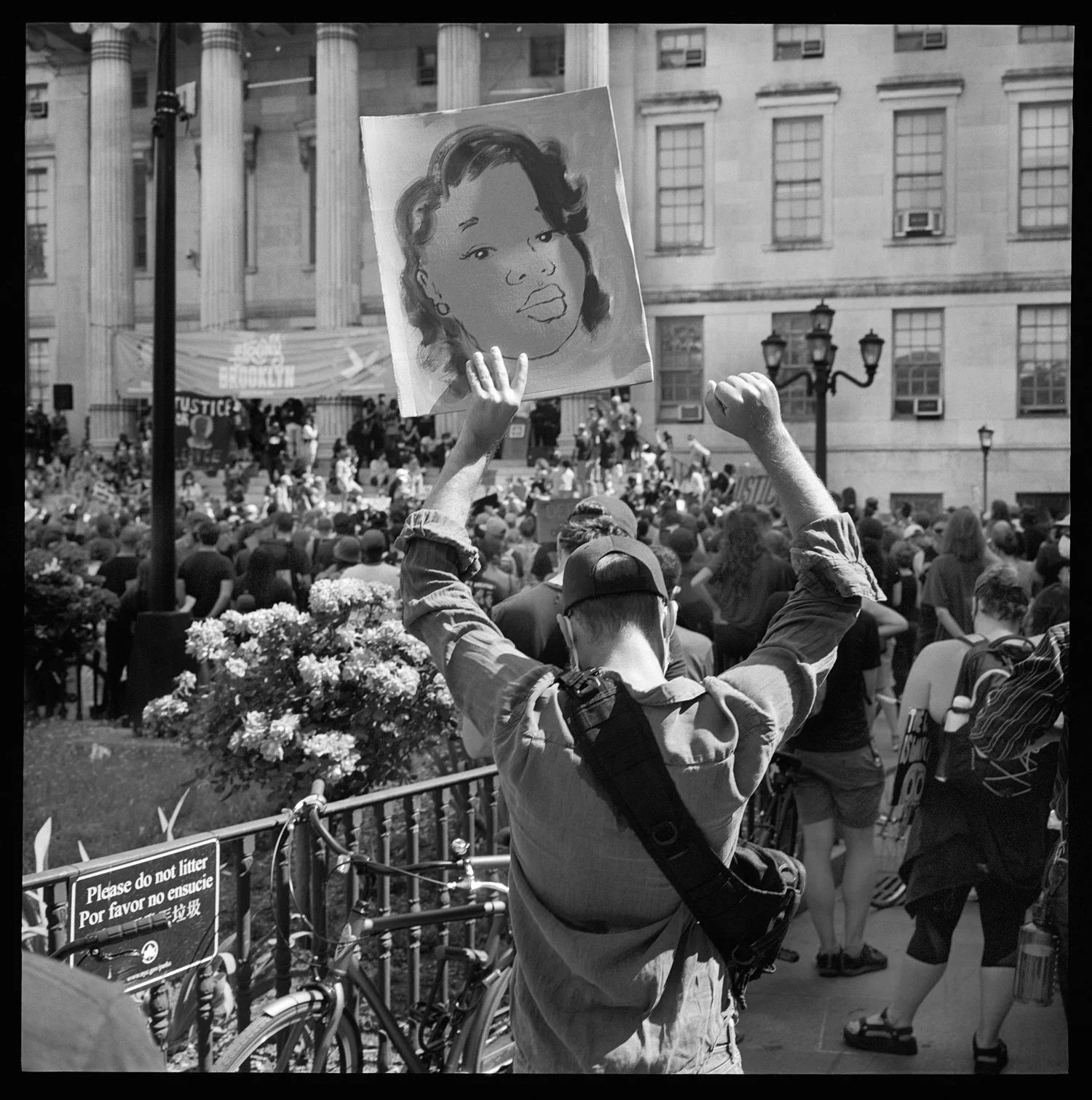
Shepp’s images of this spasm in New York City form the “Justice” chapter of his multi-part project, “The Covid Journals.” It was the pandemic that provided the context for our ability to perceive something we had long tried not to. In our isolation, no one could escape the obvious and shameful brutality encapsulated in the act. It laid bare the history of old and senseless racial hatreds, but in a truly remarkable turn of events everyone united to reject it. Shepp’s images reflect the first few months of this historic response.
A Portrait of a Society in Motion
THE EDITORIAL IDEA
Bringing together Accra Shepp’s portraits from Occupy Wall Street in 2011 with his photographs of the racial justice protests of 2020 creates a visual thread across two distinct moments of social upheaval. Seen together, the photographs become more than documentation of individual movements; they form a sustained portrait of a society—its aspirations, contradictions, resilience, and evolving ideas about justice and collective action. The project draws from the tradition of photographers such as August Sander, whose systematic portraiture used individual faces and social types to construct a broader account of a society and its values. In Shepp’s work, however, the street becomes the social landscape and protest becomes the context through which people reveal themselves. The juxtaposition of 2011 and 2020 allows individual portraits to speak across time, creating visual rhymes between bodies, gestures, expressions, signs, and environments. Together, they suggest that a society can be read through the people who step forward to represent it—making portraiture not simply a record of who was there, but a visual language through which a culture reveals what it believes, what it challenges, and what it hopes to become.
THE EDIT & SEQUENCE
THE BOOK AS OBJECT
CREATIVE DIRECTION & COLLABORATION
BEYOND THE BOOK
IMPACT